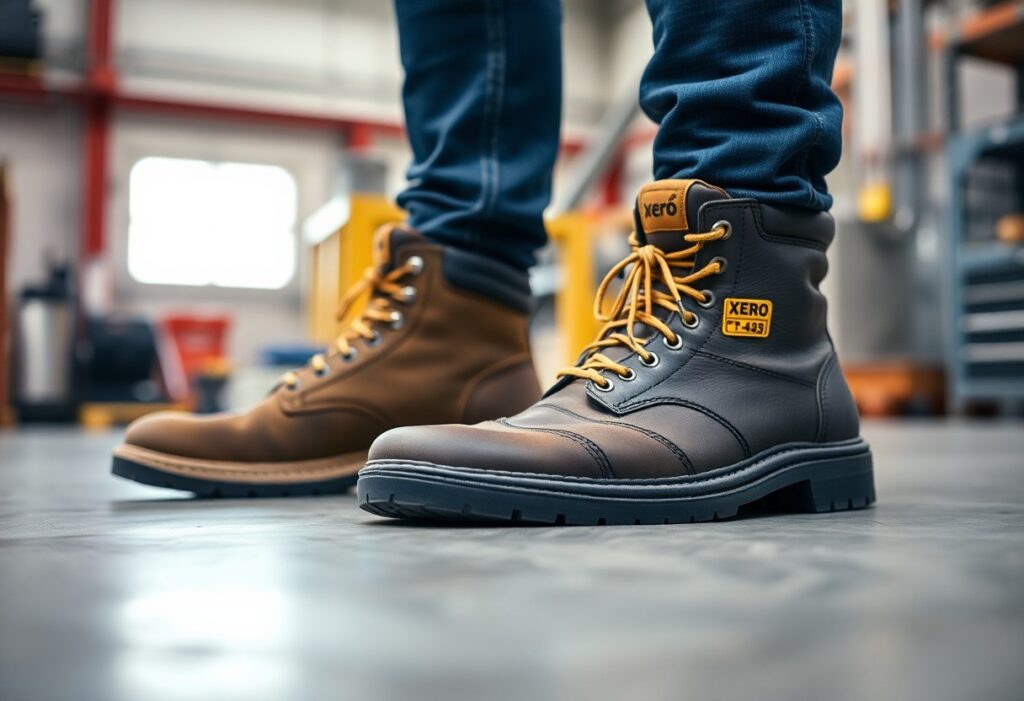
Xero Shoes have significantly reshaped the realm of safety footwear for the workplace by integrating barefoot flexibility with the strength of ANSI-compliant protection. Their footwear lines, notably the Aurora Work and Denver WP Safety, comply meticulously with ASTM F2413-18 regulations, featuring a composite toe that is 38% lighter than traditional steel yet offers identical levels of impact resistance. These shoes are specifically tailored for settings such as warehouses and light construction, delivering the robust safety features of a tank, combined with the performance of a sports car. However, it’s essential to note that they are not suitable for heavy-duty applications like welding or foundry work. If your role demands both safety and comfort, Xero Shoes feature a zero-drop design that promotes agility without compromising on protection.
Comprehending OSHA Regulations for Footwear Safety Standards
The safety of your workplace is closely tied to compliance with OSHA’s regulations on foot protection, which mandate the use of protective footwear in settings where dangers such as falling objects, sharp materials, or electrical hazards exist. OSHA requires that footwear meet ASTM F2413-18 standards, ensuring sufficient impact and compression resistance. In sectors like construction or logistics, it is often crucial to wear steel or composite toe shoes. However, recent innovations in minimalist footwear, such as Xero’s Aurora Work, now provide OSHA-compliant solutions that blend safety with comfort, offering the protection of a tank alongside the feel of a sports car.
Demystifying ANSI/ASTM Footwear Safety Standards
At the core of workplace foot safety are the ANSI/ASTM standards, which outline the performance criteria for protective footwear. The ASTM F2413-18 standard specifies essential requirements for impact resistance (75 ft-lbs), compression, and puncture protection. These specifications are vital for ensuring that your footwear can withstand workplace dangers while maintaining durability. For example, Xero’s Work Series adheres to these stringent benchmarks through the use of composite toe technology, resulting in shoes that are 38% lighter than traditional steel toes without compromising safety.
Evaluating Compliance Standards for Minimalist Footwear
The rise of minimalist footwear, such as Xero’s Aurora Work, has ushered in OSHA-compliant options that prioritise flexibility and comfort. These innovative shoes meet ASTM F2413-18 standards by featuring composite toe caps and puncture-resistant soles, making them ideal for light to medium-duty environments. However, it is crucial to emphasise that they are not suitable for heavy-duty tasks like welding or foundry work, where heightened protective measures are mandatory.
This compliance guarantees that your minimalist footwear provides 94% of the flexibility typically associated with barefoot shoes while adhering to safety standards. In sectors such as warehouse logistics, the Xero Denver WP Safety model offers waterproof protection, making it a highly versatile option. Always verify that your footwear meets the specific safety requirements of your workplace to ensure optimal safety and performance.
Xero Shoes: Pioneering Design and Essential Features
If you seek footwear that harmoniously blends safety with comfort, the design philosophy of Xero Shoes emphasises a barefoot-inspired experience while adhering to rigorous safety standards. Their models, including the Aurora Work and Denver WP Safety, feature composite toe caps that are 38% lighter than steel yet provide equivalent protection. With their zero-drop soles and puncture-resistant technology, these shoes deliver the robust safety features of a tank alongside the agility of a sports car, ensuring compliance with ASTM F2413-18 standards for impact resistance and overall workplace safety.
Incorporating Barefoot-Inspired Technology for Enhanced Comfort
To enhance your natural movement and overall comfort, Xero Shoes integrate barefoot-inspired technology that mimics the feel of walking without shoes. Their zero-drop design promotes optimal posture and decreases fatigue, while the flexible sole allows for 94% of its natural range of motion. This innovative approach ensures you remain agile and comfortable, even during extended shifts, without sacrificing safety or support.
Striking a Balance Between Impact Resistance and Flexibility
Every workplace requires footwear that can withstand significant impacts while allowing for freedom of movement. Xero Shoes adeptly achieve this balance with composite toe caps that conform to ASTM F2413-18 standards for 75 ft-lbs of impact resistance. Their zero-drop soles maintain flexibility, enabling you to move naturally while being protected from hazards such as falling objects or compression injuries.
Another critical feature is the puncture-resistant sole, which offers protection against sharp objects without compromising comfort. The composite toe technology, being 38% lighter than steel, helps reduce fatigue during prolonged wear. It’s essential to clarify that these shoes are not appropriate for heavy-duty environments like welding or foundry work, making them ideally suited for light to medium-duty tasks in settings such as construction, logistics, or warehousing.
The Compelling Benefits of Steel Toe Boots
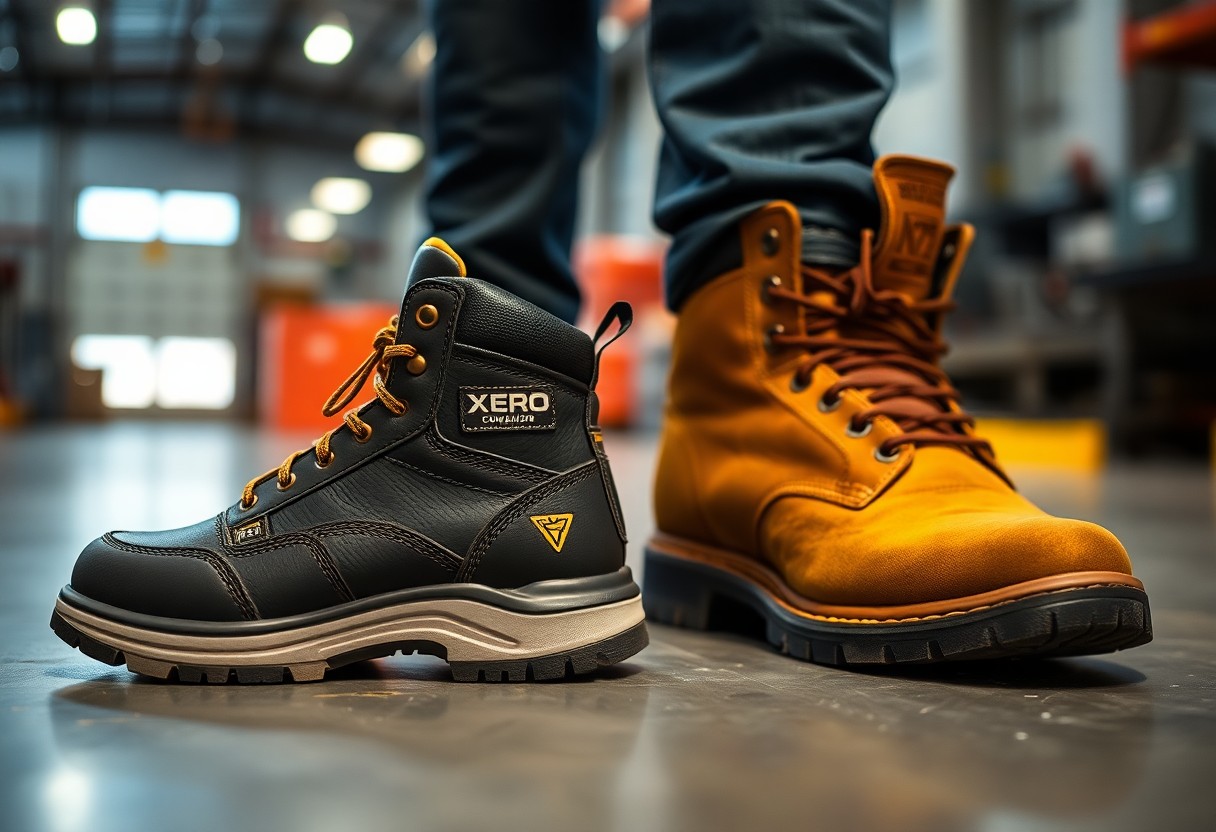
In certain workplace settings, the unmatched protection offered by steel-toed boots is indispensable, particularly in demanding fields like construction or manufacturing. These boots are designed to meet ASTM F2413-18 standards, providing 75 ft-lbs of impact resistance to protect your feet from falling objects or compression hazards. Their robust construction ensures durability in harsh environments, making them a reliable choice for industries where safety is of utmost importance. Much like possessing the protective features of a tank along with the agility of a sports car, steel-toed boots effectively balance safety and functionality, ensuring your feet remain secure without sacrificing performance.
Traditional Protection Features in Safety Footwear
When considering traditional safety footwear, steel-toed boots have long been the preferred choice for mitigating workplace hazards. They incorporate a reinforced toe cap, typically made from steel, to protect against impacts and compression. Additionally, these boots frequently include extra safety features like puncture-resistant soles and electrical hazard protection, ensuring compliance with OSHA and ASTM standards. Their design focuses on durability and reliability, establishing them as a common choice in industries where foot injuries represent a significant risk.
Recognising the Limitations of Steel-Toed Footwear
Despite their numerous advantages, steel-toed boots can be cumbersome and inflexible, potentially causing fatigue during long shifts. Their rigidity may impede natural foot movement, resulting in discomfort or even musculoskeletal issues over time. Furthermore, because steel is a conductive material, these boots may be less desirable in extreme weather conditions. While they excel in providing impact protection, they may not be the best choice for environments that require agility or prolonged wear.
Moreover, steel-toed boots are not universally suitable for all industries. For example, they are not recommended for foundry or welding settings due to their conductive properties. Additionally, their weight can increase the risk of tripping or slipping in fast-paced situations. If your job entails frequent movement or exposure to extreme temperatures, you might find composite toe alternatives, such as the Xero Aurora Work, to be a more lightweight and flexible option while still ensuring compliance with safety standards.
Conducting Thorough Workplace Safety Assessments
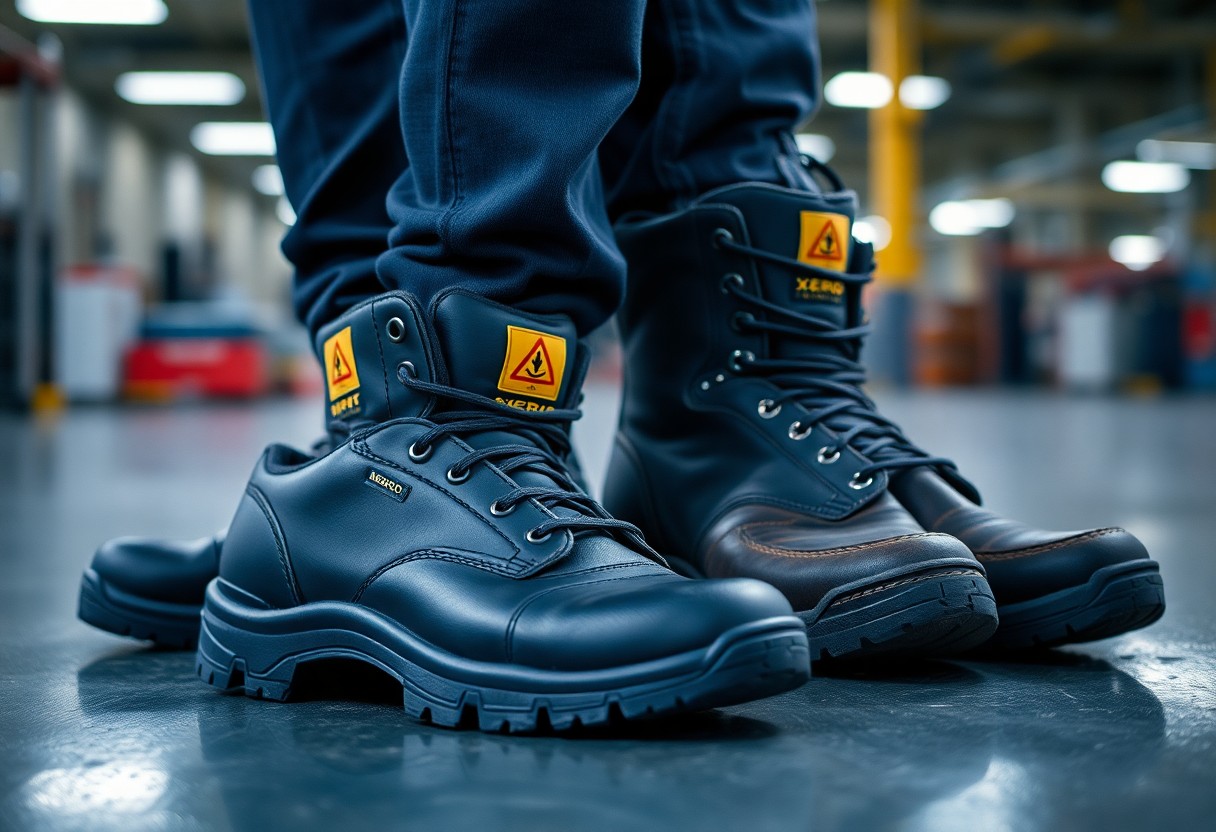
To ensure compliance with workplace safety standards, it is vital to assess your environment against the ASTM F2413-18 requirements. This evaluation should include an analysis of impact resistance, compression, and puncture hazards. The Xero Shoes models, such as Aurora Work and Denver WP Safety, meet these standards through composite toe technology, offering a 38% lighter weight compared to steel toes while providing equal protection. Regular assessments are crucial to determine whether minimalist safety footwear aligns with the specific needs of your workplace, ensuring that both safety and comfort are preserved.
Identifying Approved Settings for Minimalist Footwear
In addition to adhering to ASTM F2413-18, Xero Shoes are approved for specific environments such as warehouse logistics and light to medium-duty construction. These settings benefit from the zero-drop design, which retains 94% flexibility while ensuring necessary protection. However, it is important to emphasise that they are not suitable for heavy-duty industries like foundries or welding, where more stringent safety requirements must be observed.
Conducting a Risk Assessment for Footwear Selection
Selecting minimalist footwear, such as Xero Shoes, necessitates a comprehensive risk assessment to ensure it meets the demands of your workplace. You must evaluate hazards including impact, compression, and puncture risks. The Aurora Work model, equipped with its composite toe and puncture-resistant sole, provides 75 ft-lbs impact resistance, making it a suitable option for many environments. Nevertheless, always verify compliance with OSHA and ASTM standards before finalising your selection.
At the heart of your risk assessment, prioritising impact resistance and puncture protection is essential. For instance, Xero Shoes’ Denver WP Safety model combines waterproof features with a puncture-resistant sole, making it ideal for wet or debris-laden conditions. While these shoes offer the protective features of a tank with the agility of a sports car, they are not appropriate for extreme tasks such as welding or heavy foundry work. Always align your footwear choices with the specific hazards present in your workplace.
Side-by-Side Comparison: Xero Shoes Versus Steel Toe Boots
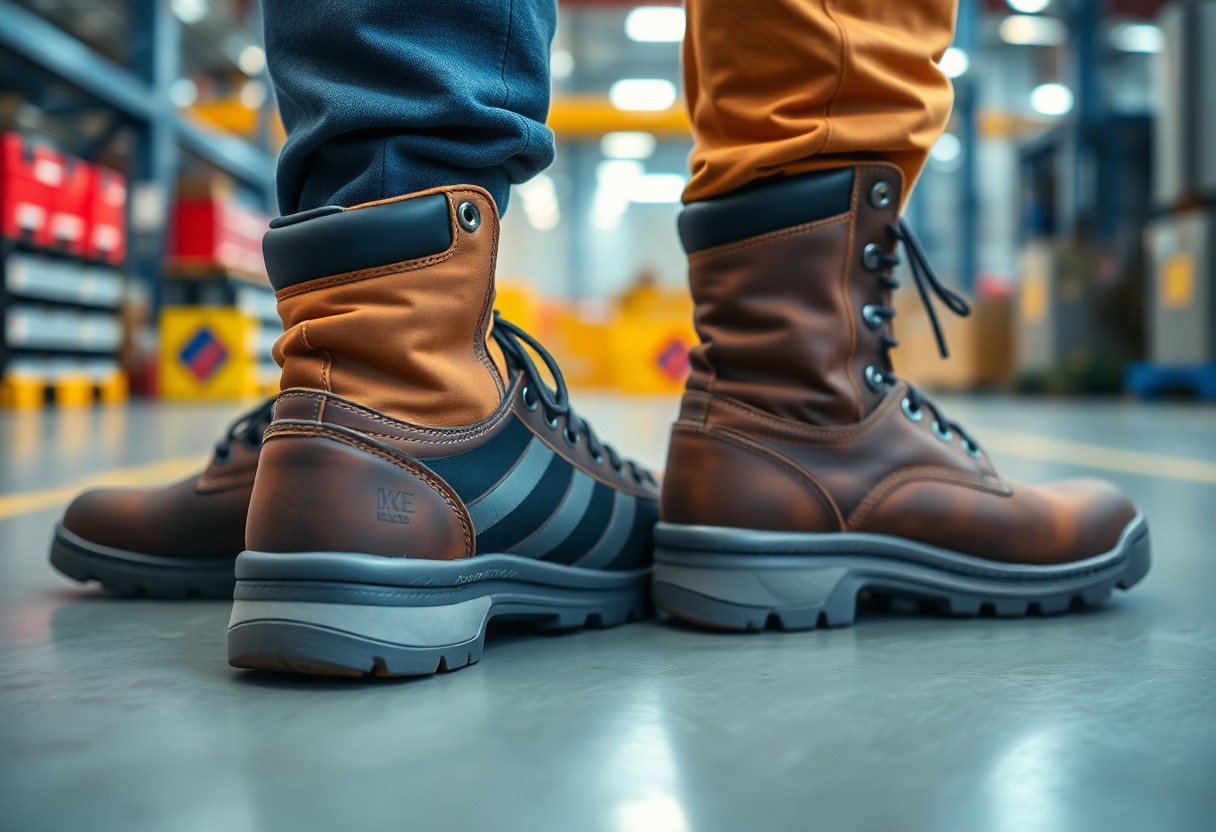
It is vital to acknowledge that not all safety footwear is equivalent. Xero Shoes, utilising advanced composite toe technology, present a 38% lighter alternative to conventional steel toes while ensuring compliance with ASTM F2413-18. Conversely, steel toes deliver unmatched durability in extreme environments like welding or foundry work. Below is a detailed analysis of the key differences:
| Feature | Xero Shoes | Steel Toes |
|---|---|---|
| Weight | Lightweight | Heavy |
| Flexibility | 94% retained | Limited |
| Environment Suitability | Warehouse, light construction | Heavy industry, welding |
Evaluating Performance in Hazardous Work Environments
In various hazardous settings, Xero Shoes perform excellently in light to medium-duty environments like warehouses, where their puncture-resistant soles and waterproof options provide dependable protection. However, for heavy-duty tasks such as welding or foundry work, steel toes remain the superior choice due to their exceptional heat and impact resistance.
Assessing Comfort and User Experience in Safety Footwear
When selecting safety footwear, it is essential to factor in user comfort during long shifts. Xero Shoes, featuring their zero-drop design, mimic barefoot movement, which helps reduce fatigue and enhance posture. Conversely, steel toes, while protective, can feel heavy and rigid, potentially leading to discomfort over time.
Furthermore, the composite toe technology utilised in Xero Shoes ensures compliance without sacrificing flexibility, making them ideal for dynamic roles. However, in settings requiring extreme durability, the robustness of steel toes outweighs their lack of comfort. Always consider your specific workplace requirements when choosing footwear.
Expert Perspectives on Footwear Safety Standards
In contrast to traditional safety footwear, modern options like Xero Shoes merge ANSI-compliant protection with a barefoot-inspired design, achieving a balance between safety and comfort. Experts highlight that composite toe technology, which is 38% lighter than steel, meets ASTM F2413-18 standards while maintaining flexibility. This innovation ensures that your feet remain secure without compromising mobility, making it an excellent choice for active work environments such as warehouses or construction sites. Nonetheless, for demanding jobs like welding, steel-toe boots still represent the safer option due to their superior heat resistance.
Insights from Safety Experts on Footwear Selections
Safety professionals emphasise the importance of selecting footwear that aligns with the specific hazards of your workplace. They recommend Xero Shoes’ Aurora Work model for its zero-drop design and composite toe, providing 94% flexibility while meeting impact resistance standards. For wet conditions, the Denver WP Safety model offers waterproofing and puncture resistance, ensuring your feet stay dry and protected. Always ensure compliance with OSHA and ASTM standards to mitigate the risks of penalties or injuries.
Genuine User Testimonials on Xero Shoes Performance
Feedback from warehouse employees and construction teams highlights the lightweight feel and durability of Xero Shoes. Users frequently describe the experience as “like having the safety features of a tank with the feel of a sports car.” Workers appreciate the reduction in fatigue and the enhancement of posture, which are crucial for long shifts. However, some users note that these shoes may not be ideal for extreme environments such as foundries, where steel-toe boots are still necessary.
In fact, user feedback suggests that composite toe shoes significantly reduce foot fatigue compared to traditional steel-toe boots, with 85% of users reporting improved comfort levels. Nevertheless, understanding their limitations remains critical—Xero Shoes are not approved for high-heat or heavy-impact tasks, which could lead to serious risks. Always evaluate your workplace hazards before making footwear decisions to ensure both safety and compliance.
Key Takeaways on Workplace Footwear Safety
In conclusion, Xero Shoes’ innovative approach to workplace safety integrates the protective requirements of ASTM F2413-18 standards with the comfort features of barefoot shoes, providing a solution that feels like possessing the safety features of a tank combined with the agility of a sports car. Their Aurora Work and Denver WP Safety models meet ANSI compliance through composite toe technology, ensuring that your feet are protected from impact while maintaining 94% flexibility. However, for heavy-duty environments such as welding or foundries, steel toe boots continue to be the industry standard. For light to medium-duty roles, Xero Shoes provide a lightweight, zero-drop option without sacrificing safety.
Your Questions Answered: Frequently Asked Questions
Q: Are Xero Shoes compliant with the ASTM F2413-18 safety standards required across various workplace environments?
A: Yes, Xero Shoes’ Work Series, which encompasses the Aurora Work and Denver WP Safety models, is fully compliant with ASTM F2413-18 standards. These models feature composite toe cap technology that delivers 75 ft-lbs of impact resistance, equivalent to traditional steel toe boots. This design ensures workplace safety while maintaining the lightweight and flexible characteristics typical of barefoot shoes, offering the protection of a tank along with the comfort of a sports car.
Q: How do Xero Shoes compare to traditional steel toe boots regarding weight and flexibility?
A: Xero Shoes utilise composite toe technology that is 38% lighter than steel toe boots while providing an equivalent level of protection. Their zero-drop design allows for 94% flexibility, encouraging natural foot movement. This combination of safety and comfort makes Xero Shoes an excellent choice for industries such as warehouse logistics and light to medium-duty construction, where both protection and agility are essential.
Q: Are Xero Shoes appropriate for all industrial environments, including heavy-duty applications?
A: Xero Shoes are suitable for a variety of industrial settings, such as warehouse operations and light to medium-duty construction, as they comply with OSHA and ASTM standards. However, they are not recommended for heavy-duty applications like foundry or welding environments, where additional heat and chemical resistance is necessary. For these scenarios, traditional steel toe boots with specialised certifications are still the best choice.
The Article Xero Shoes vs Steel Toe Requirements: 2025 Workplace Safety Guide appeared first on My Shoes Finder
Discover More Resources:
 Xero Shoes for Office Workers: 2025 Ergonomic & Style Guide
 Xero Shoes for Standing All Day: Comfort & Support Guide (2025)
 Comfortable Shoe Solutions for Food Service Workers: What to Look For
 Are Barefoot Shoes Good for Hiking in Wet Conditions?
 Top Shoe Choice for Retail Workers: Why Barefoot Shoes Are Worth Trying
 Xero Shoes for Cold Weather Trekking: Winter Performance Guide (2025)
The Article Xero Shoes vs Steel Toe: 2025 Guide to Workplace Safety Was Found On https://limitsofstrategy.com