Utilising Augmented Reality to Accelerate Growth for Small Enterprises
Recently, augmented reality (AR) was perceived as a cutting-edge technology reserved for tech behemoths in Silicon Valley or confined to the realms of gaming. For numerous small business proprietors, it seemed an extravagant luxury, financially unattainable. However, upon entering a café in Cape Town, a boutique in London, or a hair salon in Yeovil, you might discover AR experiences that are actively reshaping how customers engage with products, sample items, and make purchases.
AR has evolved from a fanciful notion into an essential and accessible tool pivotal for driving business expansion. Small enterprises that previously relied solely on competitive pricing or exceptional customer service can now harness the same interactive technologies that have propelled brands such as IKEA, Sephora, and Warby Parker to success. The remarkable advantage today is that embracing AR does not necessitate a multimillion-pound investment, making it feasible for a wide range of businesses.
So, what are the profound implications of AR for small business growth, and how can you effectively incorporate it to your advantage? Let’s delve deeper into this fascinating subject.
What Factors Contribute to AR Being a Practical Resource for Small Enterprises?
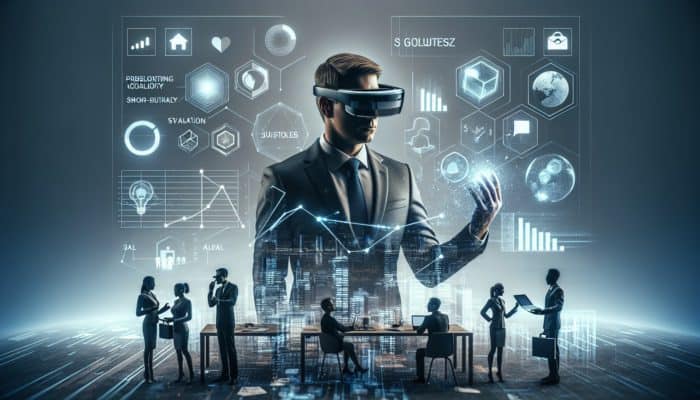
AR is now within reach for small businesses due to the significant reduction of barriers that once impeded its adoption—such as costs, required hardware, and consumer readiness. The technology has become remarkably affordable, smartphones are now equipped with integrated AR capabilities, and customers are increasingly expecting more engaging and immersive digital experiences, especially in light of the online shopping boom during the pandemic.
A decade ago, launching an AR initiative demanded a dedicated development team and specialised equipment. Today, no-code platforms like ZapWorks and Spark AR enable café owners and local retailers to create their own interactive filters and experiences without needing to write a single line of code. Modern smartphones possess the processing power necessary to render 3D previews in real time. Most importantly, consumers have grown increasingly accustomed to interacting with digital content, a shift in shopping behaviour catalysed by COVID-19.
This convergence of affordability, widespread hardware accessibility, and evolving customer expectations signifies that AR has transitioned from a distant concept into a practical tool utilised on a daily basis.

How Can AR Provide a Competitive Advantage for Small Enterprises?
AR offers small businesses a distinctive competitive edge by allowing them to present themselves as innovative and memorable, even in the absence of substantial resources akin to larger corporations. When customers encounter something fresh and captivating, they are more likely to remember it, thereby increasing the chances of selecting that brand over others.
For instance, in the eyewear sector, Warby Parker pioneered AR glasses try-ons, surpassing established high-street competitors such as Specsavers. This strategic move solidified their reputation as retail innovators. Today, independent opticians can achieve a similar impact by utilising Instagram filters at minimal costs, making innovative marketing accessible.
The furniture retail domain provides another compelling example. The IKEA Place app allows customers to visualise sofas in their homes before making a purchase. This innovation was groundbreaking upon its launch, but now platforms like Shopify offer AR previews for any retailer. Even a small furniture seller can now compete in the innovation space previously dominated by multinational corporations.
This equalising effect is significant. AR has the potential to transform a quaint boutique into a cutting-edge venue, a salon into a high-tech experience, and a local café into a futuristic establishment. For many small businesses, this enhanced perception fosters customer loyalty and encourages repeat visits, creating a sustainable business model.
What Impact Does AR Have on Engaging Customers?
AR revolutionises customer engagement by transforming passive browsing into active exploration. Instead of merely viewing static product images, customers can virtually try, position, or interact with products prior to making a purchase—this heightened engagement directly boosts their confidence in their purchasing decisions.
Virtual try-ons illustrate this effect vividly. A boutique in London provided AR sunglasses previews via Instagram, enabling customers to swipe through various styles and see how each one looked on their faces. The outcome? A remarkable 27% increase in sales within three months, coupled with a decrease in return rates. Reports from Shopify indicate that merchants implementing AR or 3D previews in their offerings experienced nearly double the conversion rates compared to those using flat images.
In the food and hospitality sectors, AR has also been employed with impressive results. For example, pizzerias in New York now allow diners to scan QR codes to view animated 3D dishes. This simple feature resulted in over a 20% increase in orders for premium toppings. Similarly, a bakery in Manchester organised an AR scavenger hunt during Easter, encouraging customers to scan codes hidden throughout the shop, leading to a nearly 20% increase in foot traffic and generating a surge of social media engagement.
The conclusion is clear: customers engage more deeply when offered opportunities for interaction. And when customers engage, they are significantly more likely to complete purchases, contributing to overall business growth.
Can AR Enhance Personalised Marketing Strategies for Small Enterprises?

Absolutely. AR revolutionises marketing into an interactive and personalised experience, enabling customers to engage with offers and promotions in ways that traditional static advertisements cannot achieve. This level of interactivity enhances retention and transforms campaigns from mere advertisements into enjoyable experiences for the consumer.
For instance, a café in Cape Town executed a campaign where pedestrians scanning a poster outside the shop unlocked a virtual coffee voucher. The redemption rates soared to three times higher than traditional paper flyers. In Yeovil, a salon developed an AR hairstyle filter for Instagram, which quickly circulated through local networks and resulted in a 15% increase in bookings within just fourteen days, demonstrating the power of engaging marketing.
Additionally, Starbucks has explored AR-powered loyalty programmes where customers can collect digital stamps. Independent cafés have since replicated this concept using free AR tools, providing customers with an added element of excitement alongside their daily coffee, enhancing customer loyalty and satisfaction.
Unlike traditional advertising methods that can feel intrusive, AR campaigns actively invite users to engage. Customers are not just passive spectators; they become active participants in the experience. This active involvement significantly increases the likelihood that they will remember, share, and act upon the experience, amplifying its impact.
How Can AR Streamline Daily Business Operations?
AR not only enhances customer-facing elements of a business; it also significantly improves internal efficiencies. For many small enterprises, employee training, inventory management, and maintenance tasks can continually drain time and resources. AR introduces innovative solutions to optimise these processes, making them more effective.
Training: Onboarding new staff can be both costly and inconsistent. With AR, employees can follow step-by-step visual overlays in real-world environments. For instance, a new barista can learn to operate the espresso machine by following visual instructions projected directly onto the machine itself. Research from Deloitte indicates that AR training can reduce onboarding time by up to 40% while enhancing knowledge retention compared to traditional training manuals, leading to a more competent workforce.
Inventory: Retailers and small supermarkets are leveraging AR to visualise stock levels and identify missing items. Employees can scan shelves and instantly see what needs restocking. Pilot programmes in Europe have shown time savings of 20–30% during stock checks, along with reduced waste, thereby improving overall operational efficiency.
Maintenance: Equipment failures can severely disrupt small businesses. With AR overlays, staff can quickly troubleshoot issues. A café can resolve problems with its coffee machine, a gym can maintain its treadmills, and an auto repair shop can diagnose faults more efficiently. This capability minimises downtime and saves costs associated with emergency repairs, enhancing productivity.
By incorporating AR behind the scenes, businesses can reduce inefficiencies and allocate more time to what truly matters: serving their customers effectively and enhancing their experience.
What Cost-Effective AR Solutions Are Available for Small Enterprises?
Contrary to popular misconceptions, AR does not require a custom app or a hefty budget. Numerous accessible tools are currently available:
| Tool | Best Use Case | Cost |
|---|---|---|
| Spark AR (Meta) | Create Instagram/Facebook filters | Free |
| Lens Studio (Snapchat) | Develop viral AR lenses | Free |
| Shopify AR | Incorporate 3D product previews into stores | Included with Shopify |
| ZapWorks | No-code AR campaign creation | Subscription-based |
| PlugXR | Rapid AR prototyping | Free & paid tiers |
| Canva Smartmockups | User-friendly AR visuals for marketing | Part of Canva Pro |
Moreover, freelancers and agencies are providing affordable custom AR development services. On platforms like Upwork, small businesses can connect with specialists to create tailored AR campaigns for under £1,000. This pricing framework positions innovation firmly within reach for independent retailers and service providers seeking to enhance their marketing efforts.
What Steps Should Small Businesses Take to Embark on Their AR Journey?

The most effective strategy to initiate your AR journey is to identify a specific challenge that AR can address, demonstrate tangible outcomes, and then progressively expand upon those successes. Many enterprises complicate their initial steps and impede their growth. A more effective approach is to adopt a gradual strategy that allows for learning and adaptation.
-
Identify a Key Challenge. Are customers hesitant to follow through with purchases? Implement AR previews. Is training taking too long? Utilise AR for onboarding. Do you need to increase foot traffic? Launch an AR filter to attract attention.
-
Select an Appropriate Tool. If your target audience is active on Instagram, begin with Spark AR. If you manage an e-commerce store, consider Shopify AR for enhanced product visualisation.
-
Develop a Pilot Project. Keep the scope manageable. Focus on one product preview, one filter, or one AR loyalty reward to ensure a successful initial implementation.
-
Evaluate the Outcomes. Monitor engagement levels, sales growth, or training efficiency to refine and enhance performance moving forward.
-
Scale Successful Initiatives. Expand your offerings to include additional products, filters, or processes based on the insights gained from your initial efforts.
This “start small, scale big” strategy facilitates low-risk AR adoption and ensures alignment with measurable business outcomes, allowing for sustainable growth.
What Future Possibilities Does AR Present for Small Business Development?
AR is increasingly becoming a gateway to the metaverse and mixed-reality experiences. While the complete vision of the metaverse continues to evolve, current AR adoption positions businesses for a future where hybrid digital-physical shopping experiences are commonplace and expected.
Technologies such as Apple’s Vision Pro, Meta’s Horizon, and Microsoft’s HoloLens are driving the quest for more immersive experiences. Early adopters will find themselves well-positioned to seize opportunities when AR storefronts, virtual events, and mixed-reality trade shows become mainstream, creating new avenues for engagement and sales.
Small businesses should approach the metaverse with caution and not rush into it without careful consideration. However, by experimenting with AR today, they can future-proof themselves. When immersive shopping and digital environments become the norm, they will already possess the skills, mindset, and customer trust necessary to thrive in this new landscape.
Is AR a Genuine Catalyst for Growth in Small Enterprises?
Indeed it is — and the evidence supporting this assertion is steadily accumulating. AR enhances conversions by minimising customer uncertainty. It cultivates loyalty by creating memorable, shareable experiences. Additionally, it streamlines operations by saving valuable time and reducing costs. Furthermore, it positions small businesses as local innovators, making them stand out in their communities.
For many business owners, the initial step can be the most intimidating. Yet, those who take this leap quickly discover that AR is less about flashy technology and more about addressing real challenges in smarter, more effective ways, paving the path for sustainable business growth.
How Can You Kickstart Your AR Journey Today?
For small businesses, AR has transitioned from a luxury item to a practical, affordable engine for growth. There is no need to develop a complex app or invest substantial sums. All that is required is to start by identifying one specific issue that AR can resolve—whether that involves enabling customers to visualise how a sofa would look in their home, allowing diners to see a dish before they order it, or expediting the training of a new employee.
From this initial step, the possibilities for expansion are immense. Businesses that engage in experimentation today will secure a competitive advantage for the future. Furthermore, since AR levels the playing field, this advantage is not exclusively reserved for multinationals. It is accessible for cafés, salons, bookstores, and local service providers willing to take the lead in innovation.
Thus, the critical question is not “should small businesses adopt AR?” but rather “which AR experience will you implement this month?”
Frequently Asked Questions About AR in Business
What Role Does Augmented Reality Play in Business?
Augmented reality (AR) overlays digital information onto the physical world using smartphones or AR glasses. For businesses, this translates into enabling customers to preview products, interact with engaging advertisements, or enjoy enriched in-store experiences that foster greater connection and understanding.
How Can AR Foster Growth in Small Enterprises?
AR assists small businesses in boosting sales by minimising purchase uncertainty, attracting more customers through interactive campaigns, and streamlining operations such as training and inventory management. It effectively levels the playing field against larger competitors.
Is Implementing AR Costly for Small Enterprises?
Not anymore. Free and reasonably priced AR tools such as Spark AR, Shopify AR, and ZapWorks enable small businesses to create engaging experiences without incurring significant financial investment. Additionally, freelancers offer custom AR projects for under £1,000, making it increasingly accessible.
Can AR Improve Sales Conversion Rates?
Absolutely. Research indicates that AR previews can potentially double conversion rates compared to conventional static images. By allowing customers to try or position products virtually, AR alleviates hesitation and encourages confident purchasing decisions.
Does AR Help Reduce Product Returns?
Indeed. Virtual try-ons and previews ensure customers are well-informed about their purchases before checkout. Retailers employing AR have reported return rates decreased by as much as 40%, resulting in both time and cost savings for businesses.
How Does AR Enhance Customer Engagement?
AR transforms browsing into an interactive experience. From AR scavenger hunts to 3D menu previews, customers are more likely to engage with your brand, share their experiences, and promote word-of-mouth referrals, all of which contribute to heightened brand loyalty and advocacy.
Is AR Effective for Local Marketing Campaigns?
Absolutely. AR posters, QR codes, and location-based filters enable small businesses to effectively target local customers. These interactive campaigns consistently outperform traditional print or static digital advertisements, driving engagement and foot traffic.
Which Industries Benefit Most from AR?
Sectors such as retail, beauty, food service, hospitality, healthcare, and fitness are leading the way in AR adoption. Any business where customers wish to try, see, or learn before committing to a purchase can gain significantly from implementing AR.
How Do AR Filters Work on Instagram and Snapchat?
Filters created using Spark AR or Lens Studio overlay effects or branded content that can be applied in real time. Customers can interact, share selfies or stories, and virally boost brand awareness across social media platforms, creating buzz around your business.
Can AR Enhance Employee Training?
Yes. AR overlays provide step-by-step guidance for various tasks, ranging from brewing coffee to repairing machinery. Businesses utilising AR for training can minimise errors and accelerate onboarding by as much as 40%, leading to a more effective workforce.
Does AR Aid in Inventory Management?
AR-enabled applications assist in visualising stock levels, identifying missing items, and optimising shelf arrangements. This capability saves staff time and reduces errors compared to traditional manual stock-checking methods, enhancing overall efficiency.
Is AR Exclusively Beneficial for Online Retailers?
No. Physical retail locations also reap benefits. AR can create gamified in-store experiences, engaging loyalty programmes, and AR menus that enhance the overall customer experience during visits.
What Distinguishes AR from VR in Business?
AR augments the real world with digital elements, while VR immerses users in a fully virtual environment. AR is often more practical for small businesses since it requires only a smartphone for implementation, making it accessible.
Do Customers Actively Use AR When Shopping?
Yes. Surveys indicate that over 70% of consumers are more inclined to purchase from retailers offering AR experiences. Younger demographics, particularly Gen Z and Millennials, actively seek out AR opportunities, making it a crucial factor in their purchasing decisions.
Can AR Foster Customer Loyalty?
Certainly, interactive loyalty programmes, gamified rewards, and personalised AR experiences make customers feel engaged and valued, encouraging them to return for repeat visits and fostering long-term relationships.
What Is the Simplest Way to Start Using AR?
Begin with a straightforward use case: a product preview for a single item, an individual AR Instagram filter, or a simple loyalty campaign. Assess the outcomes, then scale up what proves effective to create a more substantial impact.
Is a Dedicated App Required to Use AR?
Not necessarily. WebAR tools and social media filters allow customers to access AR experiences directly through their existing browsers or apps, eliminating the need to download any additional software, thus increasing accessibility.
Is AR Relevant for Service-Based Businesses?
Absolutely. Salons can provide hairstyle previews, gyms can guide workout sessions, and repair services can display troubleshooting overlays. AR enhances experiences beyond merely products, making it a versatile tool across various sectors.
How Does AR Connect to the Metaverse?
AR serves as a bridge to the metaverse. Businesses adopting AR today will be prepared for immersive digital storefronts, hybrid events, and mixed-reality shopping as these innovations become more mainstream, setting the stage for future growth.
What Does the Future Hold for AR in Small Businesses?
The future promises broader AR implementation in retail, hospitality, and local marketing, driven by technologies like Apple Vision Pro. Small businesses experimenting with AR today will enjoy a competitive edge moving forward, positioning themselves as forward-thinking and innovative.
Connect With Us on LinkedIn
Presented By: Digital Marketing in Yeovil
The post Augmented Reality’s Impact on Small Business Growth appeared first on Ezi Gold.
The Article Augmented Reality Boosts Growth for Small Businesses Was Found On https://limitsofstrategy.com