Understanding the Impact of the May 2026 Core Update on SEO and AI-Driven Search Trends
Google launched the May 2026 core update on May 21 at 08:40 PDT, with full implementation expected to span up to two weeks. This marks the second core update of the year, arriving shortly after the one in March. Many analyses overlook that this update aligns with the most substantial shift in AI search that Google has ever undertaken. Two significant trends are converging, and brands focusing solely on traditional ranking metrics are making decisions based on insufficient insights.
What Sets the May 2026 Core Update Apart from Prior Updates?
The May 2026 core update represents a shift in approach rather than a punitive measure. Pages experiencing a drop in rankings have been re-evaluated against all other content within Google’s index. Conversely, pages that improve their rankings align more closely with Google’s updated standards for higher-quality relevance signals. This assessment is valid; the ranking system now encompasses more than just positions on a Search Engine Results Page (SERP). It also considers whether your content is selected as a source for AI-generated responses. These are two distinct selection processes functioning within the same index.
Key Transformations Announced at Google I/O 2026 That Reshape Search
The search box has received its first redesign in 25 years.
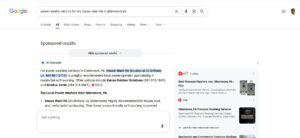 The newly designed interface treats every user query as a chance for AI to generate a comprehensive answer, rather than merely providing a list of links. According to VentureBeat, this shift demonstrates Google’s commitment to making AI-mediated answers the cornerstone of the search experience.
- AI Overviews prominently highlight preferred sources. Google has introduced a system where users’ trusted sources are emphasised in AI search results, showing that brand trust and recognition are crucial factors in determining which sources are favoured by AI answers.
- AI Mode now serves as the default experience for many queries. Queries that once yielded ten blue links now provide synthesised answers alongside cited sources.
Research published on arXiv, titled “How Generative AI Disrupts Search,” reveals that AI Overviews, Gemini, and traditional Google Search yield significantly different results for identical queries. Elements such as extractable claims, source authority, and answer completeness carry more weight than backlink profiles and keyword density. The core update aims to recalibrate which pages warrant ranking, while the AI transformation signifies Google’s criteria for determining which pages should be referenced by AI systems. Both developments are occurring simultaneously.
What Changes Have Occurred in Traffic Quality Recently?
Traditional SEO metrics usually emphasise ranking positions and click-through rates. an emerging dataset focusing on the quality of AI-referred visitors is becoming a critical metric.
Data from Semrush shows that AI-referred visitors convert at an incredible rate of 4.4 times higher than traditional organic visitors as of June 2025. This occurs because users who click through after encountering an AI-generated answer have already demonstrated high intent. Google acts as a filtering layer, screening out casual browsers; thus, those who remain and click have already expressed a desire for more detailed information.
This creates a paradox: a page that drops three positions in SERP rankings during the core update might simultaneously gain citation status in Google’s AI Overview for the same query. Conventional wisdom would suggest that the page has lost its value, but a thorough analysis indicates it has actually acquired a more advantageous position regarding traffic quality.
Brands that maintain visibility across various AI platforms—such as Perplexity, ChatGPT, Claude, and Google AI Overviews—are less reliant on Google organic rankings alone. When a core update occurs that reshuffles SERP positions, the AI citation traffic serves as a safety net that traditional SEO-focused brands may lack.
What Factors Contribute to Increased Volatility Among B2B Brands?
 Three interrelated factors converge during this core update:
User behaviour is rapidly changing. Reports from TechCrunch reveal a 30% increase in DuckDuckGo installations as users increasingly reject being “force-fed” AI answers. Privacy-focused search alternatives are gaining traction. Brands can no longer rely solely on visibility within Google; a diversified presence across multiple discovery platforms mitigates dependence on any single algorithm’s unpredictability.
Expectations around content quality have fundamentally shifted. The current ranking systems place a greater emphasis on context, authority, expertise, search satisfaction, and topical relevance compared to previous iterations. Websites that primarily rely on low-quality AI-generated content, aggressive SEO tactics, or insufficient topical authority are experiencing significant ranking fluctuations. In contrast, websites demonstrating strong topical authority, genuine expertise, and offering a high-quality user experience are more likely to succeed.
AI Overviews are becoming increasingly selective about the sources they feature. With inline links next to bullet points, hover previews, and article recommendations at the end of AI-generated answers, Google’s May 2026 core update AI is evolving to become more discerning. The criteria for inclusion in AI Overviews significantly differ from traditional ranking criteria. Factors such as entity clarity, quotable statistics, and expert attribution now play a more crucial role in AI citation decisions than conventional SEO metrics.
How Can You Establish a New Framework for Measuring SEO Success?
Focusing solely on traditional ranking positions means you are missing out on essential insights. The measurement framework that will endure through the May 2026 core update includes:
Dual tracking: Monitor both SERP rankings and AI citation presence across Google AI Overviews, ChatGPT, Claude, and Perplexity. A page ranked #7 may be cited in AI answers for the same query, making it potentially more valuable than a page ranked #2 without AI visibility.
- Traffic quality ratio: Differentiate between AI-referred traffic and traditional organic traffic. Assess conversion rates based on the source. With AI-referred visitors converting at four times the rate, this traffic holds significantly more value than raw volume might suggest.
- Brand mention velocity: Track how often your brand appears in AI-generated answers, beyond just traditional search results. Brand mentions in AI responses correlate strongly with higher purchase intent compared to conventional ranking positions.
- Entity clarity audit: Assess whether your content clearly defines entities, provides quotable statistics, and accurately attributes expertise. These signals are becoming increasingly vital in determining the likelihood of AI citations.
What Actions Should You Take Now to Adapt to the May 2026 Core Update?
The combined effects of this core update alongside the transformation in AI search present both challenges and opportunities. Brands well-prepared to benefit are those that have established authority across various discovery platforms rather than simply optimising for a single ranking algorithm.
Begin by conducting a thorough audit of your content for entity clarity. AI systems excel at recognising entities rather than merely keywords. Pages that clearly articulate their subject matter, identify experts, and present proprietary statistics will be selected more frequently for AI citations compared to those focused solely on keyword density.
Next, track AI visibility separately from traditional rankings. Implement monitoring for your brand name and key terms across AI platforms, not just Google. The brands that will excel during this update are those measuring the right metrics amidst the volatility.
Reduce reliance on any single discovery platform. If your traffic heavily depends on Google organic rankings, this update has highlighted that vulnerability. A diversified presence across earned media, industry publications, and multiple search engines fosters resilience against future algorithm changes.
The rollout of the May 2026 core update is expected to conclude soon, while the AI search transformation will persist.
Brands that grasp both dynamics—and measure them effectively—will be better equipped to make informed decisions than those tracking only partial data.
Join Our Mailing List for Insights on SEO Strategies
 |
|
|
|---|
Geoff’s Research Sources for This Article:
– [Google Search Status Dashboard](https://status.search.google.com/incidents/wdAXJk6LRRihEjpzEeWE)
– [AuthorityTech: May 2026 Google Core Update](https://authoritytech.io/blog/may-2026-google-core-update-seo-ai-visibility-impact)
– [VentureBeat: Google Search Box Redesign](https://venturebeat.com/technology/google-just-redesigned-the-search-box-for-the-first-time-in-25-years-heres-why-it-matters-more-than-you-think)
– [The Verge: Google AI Search Changes](https://theverge.com/tech/934217/google-search-box-does-everything-ai-io-2026)
– [TechCrunch: DuckDuckGo Growth](https://techcrunch.com/2026/05/26/duckduckgo-installs-are-up-30-as-users-reject-being-force-fed)
– [arXiv: How Generative AI Disrupts Search](https://arxiv.org/abs/2604.27790)
– [Semrush: AI Traffic Quality Data](https://www.semrush.com)
The Article The Effect Of Google May 2026 Core Update Hits Hard was first published on https://marketing-tutor.com
The Article Google May 2026 Core Update: Significant Impact Unveiled Was Found On https://limitsofstrategy.com
The Article Google May 2026 Core Update Reveals Major Impacts found first on https://electroquench.com